

Government meetings in Mbale need a venue that can carry formal sessions, secure document handling, reliable meals, practical parking and accommodation for delegates travelling in from outside the city. Mbale is a regional administrative centre for Eastern Uganda, so ministries, agencies, local governments and public programmes can meet closer to the districts they serve while still using full hotel conference services. We host a great deal of that work.
Why Government Teams Meet Here
Not every public sector meeting needs to happen in Kampala. For programmes involving Eastern Uganda districts, meeting in Mbale cuts the travel for district officers and gives central government teams a practical base for regional consultations, planning sessions, training and review meetings.
The city connects with the Bugisu, Sebei and Bukedi sub-regions, with road links toward Jinja, Soroti, Tororo and Kapchorwa. That makes attendance a good deal easier when your meeting brings several local governments together.
Mbale also has the services a formal event needs around it. Hotels, banks, fuel stations, printing services, restaurants and health facilities are all close. Your delegation can run a full day here without depending on a remote venue for every small requirement.
Choose the venue on the needs of your programme rather than on the size of the city, though. We would rather you did that than assume the biggest name in town is the right room.
What the Venue Should Provide
A public meeting carries more administrative weight than a private gathering: attendance registers, official invitations, procurement documents, name plates, speaking order, media access and sometimes security. We expect to work with your event coordinator before the day rather than on it.

The room setup has to fit the meeting. A boardroom suits a small technical committee. Classroom seating helps during training where delegates need writing space. Theatre seating suits a briefing or a public presentation. Banquet style is for a formal dinner, not the main session.
Ask us to confirm the final setup in writing. It is far easier to correct a seating plan the day before than while senior delegates are walking in.
Workshops and Regional Consultations
A regional consultation brings officials from several institutions into one room, and the programme usually runs from opening remarks through technical presentations, group discussion, district feedback and an agreed action session. That mix needs flexible space, and we will plan it with you.
If you have breakouts, settle where each group meets. Five groups in the corners of one hall generates too much noise to be useful. Separate rooms or shaded outdoor areas work better, depending on the subject and how confidential it is — ask us what we have free.
For training, we can support projection, sound and internet where you need online material. Have your facilitators keep offline copies of the presentations and reference documents anyway.
Accommodation for Delegates
A residential government meeting is far easier to manage when your delegates sleep at the same property as the meeting. Morning starts become predictable, the transfer between hotel and venue disappears, and meals tie directly to the agenda.
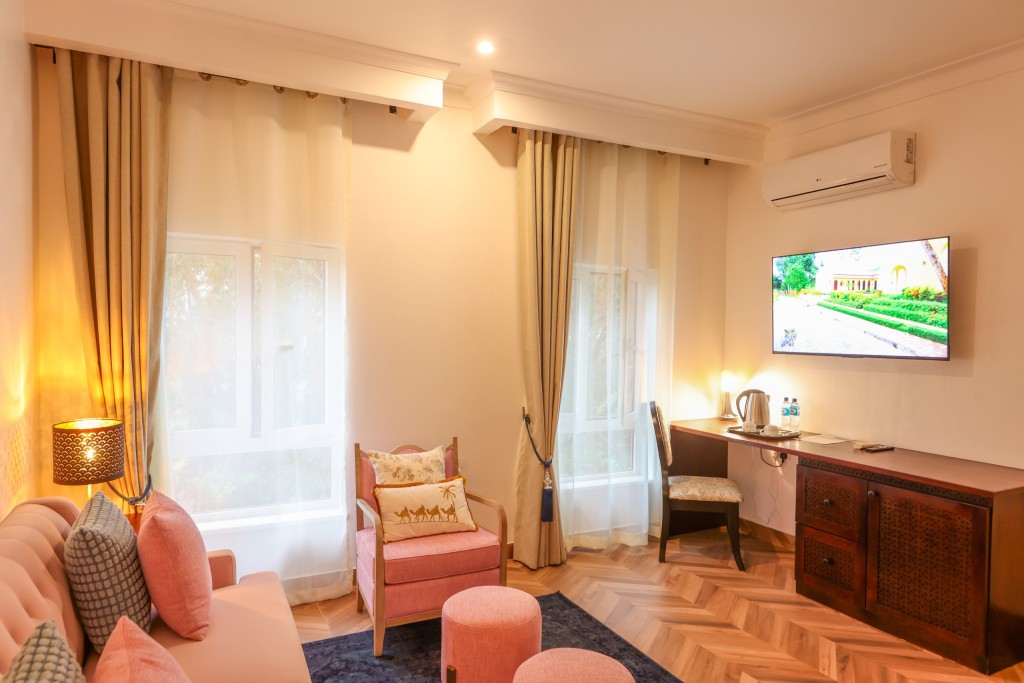
Send us a rooming list before arrival, and separate the principal delegates, the technical staff, the drivers and the support teams. If your institution has set room categories or accommodation ceilings, tell us at the quotation stage rather than after.
Our rooms are on the same property as our meeting facilities, and we run residential conferences combining guest rooms, dining and meeting space for multi-day groups. Full detail is on the hotel page.
And do not assume every delegate arrives at the same time. Government teams travel from different offices, so give our reception a clear arrival list where you can.
Catering and Formal Meals
You may need tea, lunch, dinner or a formal reception. Meal timing follows your programme, not our kitchen’s convenience. If the morning session is likely to run long, build flexibility into the tea break so our staff are not serving while a speech is still going.

A formal event may need a head table, reserved seating or separate service for a small group. Tell us before the meal, not once service has begun.
Dietary information matters too. Collect it at registration and send it to us in one document, and tell your coordinator whom to contact here if something comes up during the meeting.
Projection, Sound and Hybrid Participation
Presentations are standard in public sector meetings. Confirm the projector, screen, microphones, speakers and power supply for the actual room you are using — a large hall needs considerably more sound support than a small boardroom.
Hybrid attendance adds a layer. If officials are joining online, test the internet, the camera position and the audio before you start. A laptop microphone at one end of a long table rarely works for anyone at the other, and we would rather set it up properly with you in advance.
Ask us whether technical support will be on hand during the session. If we supply the equipment, agree who operates it. If your institution brings its own, agree the setup time and room access with us.
Security, Privacy and Documents
Some government meetings deal with public information. Others involve personnel matters, budgets, investigations, procurement or policy drafts. Tell us what level of privacy you need without disclosing material we do not need to know — we will work to it.
Ask us whether another event will be using an adjacent room. Settle how registration is controlled and where confidential papers can be kept during breaks. For highly sensitive work, your institution will want its own document custodian and security process, and we will accommodate it.
Parking is part of the security plan too. Senior officials, institutional vehicles and drivers need clear access, so tell us if vehicle space has to be reserved.
Why We Work for Government Meetings
We are in Mbale and we host government meetings, workshops and corporate events regularly. Our meeting rooms can be arranged in several seating formats, and we have guest accommodation, Masaaba Restaurant, gardens and event support on the same site.
For a public institution, the value is that every part of a residential meeting sits in one place. Your delegates meet, eat and sleep without moving between properties.
Being in the city also keeps your group close to normal services while leaving open a short social programme around Wanale, Sipi Falls or the wider Mount Elgon area once the formal work is finished.
Requesting a Proposal
Send us a complete brief: the institution, the dates, expected delegates, meeting layout, number of nights, room categories, meals, equipment, parking needs and any protocol notes that affect the setup.
Tell us your procurement process at the start. If you need supplier documents, tax records, a local purchase order, a framework contract or another formal step, we will tell you straight away whether we can work within it.
If your final participant count is not settled, give us a realistic range and ask when we need the confirmed number. That gives us both a working base without anyone pretending the list is final.
Registration and Meeting Administration
A government meeting involves more than the people in the room. Drivers, protocol officers, secretariat staff, media teams, technical advisers and service providers all move around the property. A simple registration plan separates those roles and stops the meeting room filling before the first session.
Prepare the attendance register before arrival and decide who owns changes to it. If institutions are substituting delegates, your secretariat should record it rather than leaving our reception to decide who belongs on the list. Name tags, seating cards and room allocations should all use the same final names.
Put the registration desk somewhere practical — close enough to the meeting room for late arrivals, but not in the doorway where it interrupts the discussion. If delegates are collecting files, meal information and room keys, split those tasks when the group is large. We will help you set it up.
At the end of each day, have your secretariat reconcile attendance, room occupancy and meal counts with our event contact. That one administrative step prevents most of the disputes that come up when the final invoice is reviewed.
Accessibility and Protocol
Public meetings include older delegates, people with limited mobility and visitors who have never been here before. Ask us about access from the parking to the meeting room, where the washrooms are and whether stairs are involved. If someone needs a room close to the meeting space, tell us before arrival rather than trying to move people on the day.
Protocol shapes movement too. A principal guest may need a waiting area before entering; media may need a separate position for the opening remarks. None of that makes the event complicated — it just has to reach us early enough to prepare the space.
Clear signage helps regional delegates arriving at different times. One sign at our reception and another near the meeting room saves your secretariat a run of phone calls. For a large consultation, put one person on arrivals so your chair and technical team can concentrate on the programme.
Closing the Meeting
A government meeting is only useful if the decisions leave the room in a form somebody can act on. Build time into your final session for the agreed actions, the responsible offices and the deadlines. Do not let your secretariat rely on notes taken while delegates are already standing up.
If you need signed attendance sheets, resolutions or workshop outputs, check they are complete before people leave. Missing signatures are very hard to collect once officials have returned to their districts.
We can support printing, room resets and meal timing, but your institution owns its official record. Before checkout, have your coordinator review extra room charges, late meal requests and any added equipment with our contact so your finance team receives a clean file.
Government Meetings FAQ
Can government agencies hold residential meetings in Mbale?
Yes. There are hotels here, ours included, with meeting rooms, accommodation and catering, which makes multi-day workshops and consultations practical.
Do you host government meetings?
Yes — government meetings are a regular part of our conference business, alongside workshops, conferences and retreats.
How much does it cost?
There is no single price. It depends on delegate numbers, room setup, meeting days, accommodation, meals, equipment and other services. Ask us for a written quotation for the actual event.
Which seating format should we use?
Boardroom for a smaller decision group, classroom for training, theatre for a larger briefing. Let the agenda decide the layout.
Can a meeting include accommodation and meals?
Yes. We combine guest rooms, conference space and catering in one programme.
What should we send when requesting a proposal?
Dates, delegate estimate, number of nights, preferred room setup, meal plan, equipment needs, parking, protocol information and your procurement requirements.
Plan Your Government Meeting With Us
For a government workshop, consultation or regional meeting, send our events team your dates, delegate estimate, room needs and meeting programme and we will prepare a proposal covering the conference, accommodation and catering. Call +256 709 748 009 or +256 781 392 961, or email info@mountelgonhotel.com. Mount Elgon Hotel & Spa, Plot 30 Masaba Road, Mbale.