
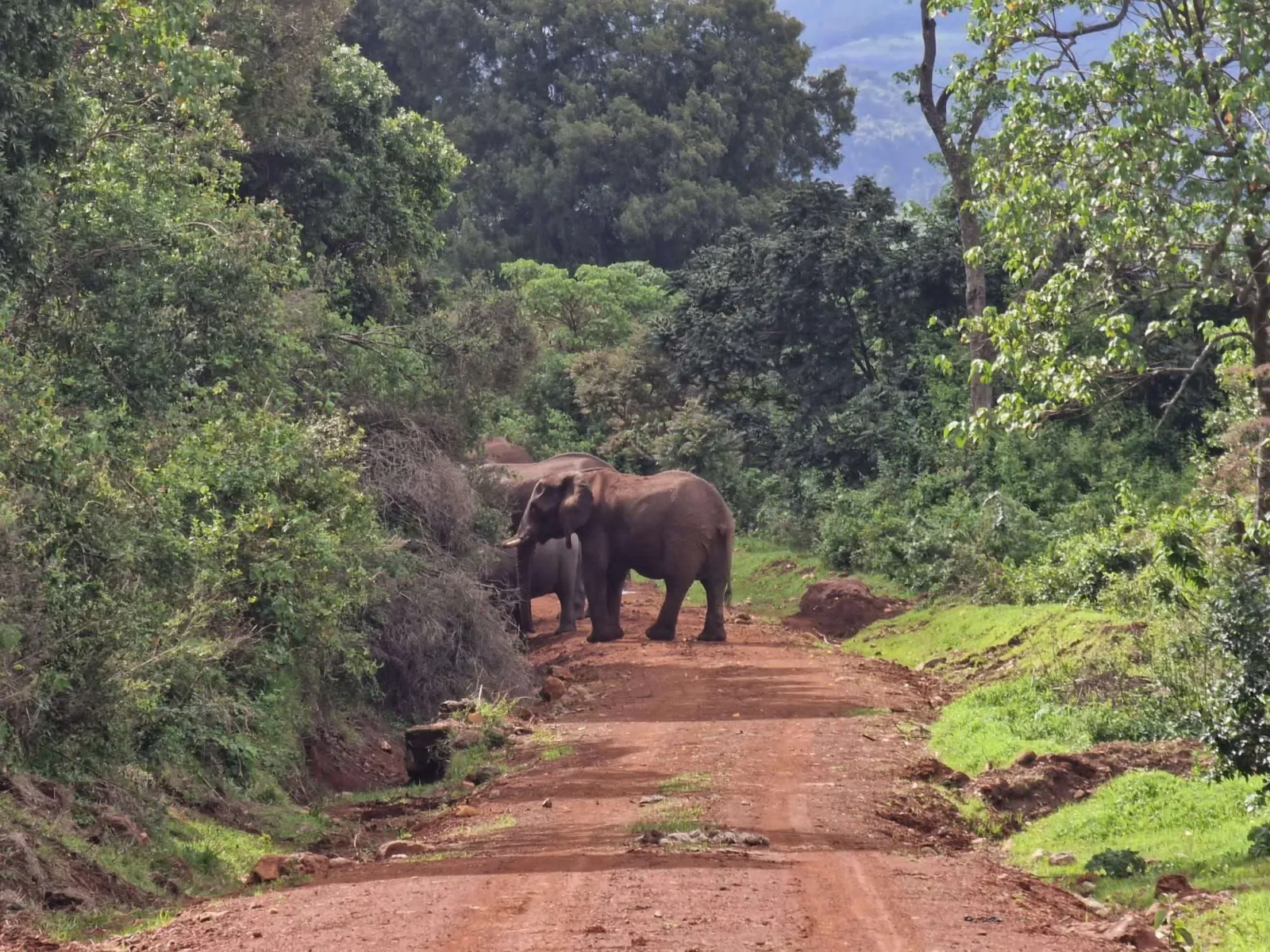
Although Mount Elgon is not known for large concentrations of savannah wildlife like Uganda’s lowland parks, the mountain hosts an impressive range of forest animals, primates, birds, and smaller mammals. Exploring these habitats allows visitors to encounter wildlife in a peaceful and less crowded environment compared to traditional safari destinations.
Mammals of Mount Elgon
Mount Elgon’s forests and valleys provide habitat for several mammals adapted to the mountain ecosystem. Among the most notable are forest elephants, which occasionally move through the park in search of mineral salts and vegetation. These elephants are particularly famous for visiting caves such as Kitum Cave, where they extract salt from the cave walls.
Other mammals found in the park include buffalo, bushbucks, duikers, and giant forest hogs, all of which inhabit the forested areas and open glades across the mountain slopes. Smaller mammals such as hyraxes and various rodent species are also common within the park’s ecosystems.
Primates in the Mount Elgon Forests
The dense forests of Mount Elgon provide an ideal habitat for several primate species. Visitors hiking through the lower forest zones often encounter black-and-white colobus monkeys, recognizable by their long white tails and striking black fur.
Blue monkeys are also frequently seen moving through the canopy in search of fruits and leaves. These primates add life to the forest environment and are among the most commonly spotted animals during guided nature walks within the park.
Birdlife of Mount Elgon
Mount Elgon is considered an important birding destination in Uganda due to its wide variety of forest and highland bird species. The mountain’s different vegetation zones support numerous birds that thrive in montane environments.
Birdwatchers may encounter species such as the Hartlaub’s turaco, African blue flycatcher, white-starred robin, and various sunbirds. Raptors and other birds of prey can also be seen soaring above the cliffs and valleys surrounding the mountain.
For bird enthusiasts, Mount Elgon offers a rewarding experience with opportunities to observe both resident and migratory species across its diverse habitats.
Unique Mountain Ecosystems
The wildlife of Mount Elgon is closely linked to the mountain’s changing ecological zones. As hikers ascend the mountain, the vegetation transitions from dense forests to bamboo zones and eventually to moorlands characterized by giant lobelias and heathers.
These ecosystems support different forms of wildlife adapted to cooler temperatures and higher altitudes. The presence of such diverse habitats within a single mountain makes Mount Elgon an important refuge for biodiversity in eastern Uganda.
Wildlife Viewing Experiences
Wildlife encounters on Mount Elgon are often integrated into activities such as forest walks, hiking expeditions, and birdwatching tours. Guided walks led by experienced park rangers allow visitors to explore the forest safely while learning about the animals and plants that inhabit the mountain.
The quieter nature of the park allows travelers to appreciate wildlife in a more tranquil environment where natural sounds and forest scenery enhance the experience.
Conservation Importance of Mount Elgon
Mount Elgon National Park plays a crucial role in protecting wildlife and preserving natural ecosystems in eastern Uganda. The forests of Mount Elgon are also an important water catchment area, feeding rivers that support agriculture and communities across the region.
Conservation efforts aim to maintain these ecosystems while promoting sustainable tourism that benefits both wildlife and local communities living around the mountain.
Experiencing Mount Elgon’s Wildlife
For visitors staying at Mount Elgon Hotel & Spa in Mbale, exploring the wildlife of Mount Elgon offers a deeper understanding of the region’s natural heritage. Guided forest walks, birdwatching excursions, and mountain treks provide opportunities to discover the unique species that inhabit this remarkable volcanic landscape.
Wildlife exploration on Mount Elgon reveals a quieter side of Uganda’s biodiversity—one where forests, mountain air, and hidden wildlife encounters create a memorable nature experience.